
Why Does Ice Build Up Behind My Chimney?
Why ice and snow pile up behind a chimney in Northwest Indiana, how to tell an ice-dam leak from a flashing or crown leak, and what to do safely from the ground.
NWI Chimney · November 19, 2026
The short answer
Ice builds up behind a chimney because the chimney blocks snow sliding down the roof, and heat leaking from the attic around the chimney melts that snow from below. The meltwater refreezes, backs up and finds its way under the step and counter flashing, so you see a drip near the chimney on a cold, sunny day. Stay off the roof: pull the snow down with a roof rake from the ground, then have the flashing and the upslope side of the chimney checked. Flashing repair runs $300–$600.
How a chimney traps snow and ice
The University of Minnesota Extension explains the basic recipe: snow on the roof, a roof surface that is above 32°F in one spot and below freezing in another. Water melts where the roof is warm, runs down and freezes where it is cold. The extension also names chimneys as one of the heat sources that warms an attic, especially when the fireplace or a wood stove is used often.
A chimney adds three problems of its own:
- It is a wall in the middle of the roof. Snow sliding down the slope stops against the upslope face of the chimney and piles up there.
- The framing around it leaks heat. The gap between the chimney and the attic floor is often poorly sealed, so warm house air rises along the masonry and melts snow right where it is deepest.
- The joint is the weakest point. Where brick meets shingles, the roof depends on metal flashing, and standing water finds any loose piece.
Why it happens so often in the Region
Lake-effect snow off Lake Michigan can bury Northwest Indiana roofs fast. In the February 2016 event, the National Weather Service's Northern Indiana office reported 6 to 12 inches across most of its area, with the heaviest pockets in northern LaPorte, Porter and Lake counties and 17.8 inches measured near La Porte. Snow like that drifts against chimneys, then a sunny afternoon warms the roof and a clear night refreezes it.
Wider chimneys catch the most snow. The 2018 International Residential Code, the base of the Indiana Residential Code, calls for a cricket or saddle (a small peaked roof behind the chimney that splits the water around it) on the ridge side of any chimney more than 30 inches wide. Many older Region homes have wide chimneys with no cricket, or one whose flashing has worn out.
Ice dam, flashing or crown: how to tell
- Ice-dam leak: shows up during a thaw after heavy snow, often on a sunny day, with visible ice or deep snow behind the chimney. It may stop when the weather turns cold again.
- Flashing leak: water on the ceiling or wall beside the chimney during ordinary rain too, especially wind-driven rain. Lifted, rusted or caulk-only flashing is the usual cause.
- Crown or cap leak: water inside the firebox, rust on the damper, or damp brick in the attic or basement. That water is coming in at the top, not at the roof line.
Often it is more than one. Ice backing up against flashing that was already loose leaks far sooner than ice against tight flashing.
What you can safely do
- Stay off the roof. North Dakota State University Extension advises using a roof rake so you do not have to climb up, and to watch for overhead power lines.
- Rake from the ground. Pull the snow off the lower few feet of the roof and, if you can reach, away from the chimney. Leave a thin layer rather than scraping down to the shingles.
- Do not chip or hammer the ice. Shingles and flashing break far more easily than ice in the cold.
- Inside: catch the drip, move belongings, and take photos of where the water shows up and when. That timing tells us which of the three leaks it is.
What we fix and what it costs
Once the snow is gone, we look at the whole top of the chimney, because an ice dam usually just exposes a weak spot that was already there. Our leak assessment and water test are free with the repair, and every job gets a flat price before any work.
- Flashing reseal or reset: $300–$600
- Crown seal or resurface: $250–$450; crown rebuild $600–$1,400
- Stainless cap (single flue): $250–$400; chase cover $250–$450
- Breathable masonry water repellent: $300–$900 on sound brick
Sealing attic air leaks and adding insulation is the other half of prevention; that is work for an insulation or roofing contractor.
More answers
Is heat tape around the chimney a good fix?
It treats the symptom. NDSU Extension notes that homeowners often use heat tape instead of fixing the cause. Good flashing, a cricket on wide chimneys and a well-sealed attic do more.
Should I call during a storm or wait for a thaw?
Call when you see water, so we can book you, but flashing and crown work happens on a dry, clear roof. Until then, rake from the ground and catch the drip.
Can a chimney cap stop an ice-dam leak?
No. A cap keeps rain and snow out of the flue. Ice-dam water gets in at the roof line, under the flashing.
Will an ice-dam leak damage the chimney itself?
It can. Water that sits against the brick and freezes repeatedly breaks down mortar and brick faces, so the sooner the flashing is fixed, the cheaper the repair.
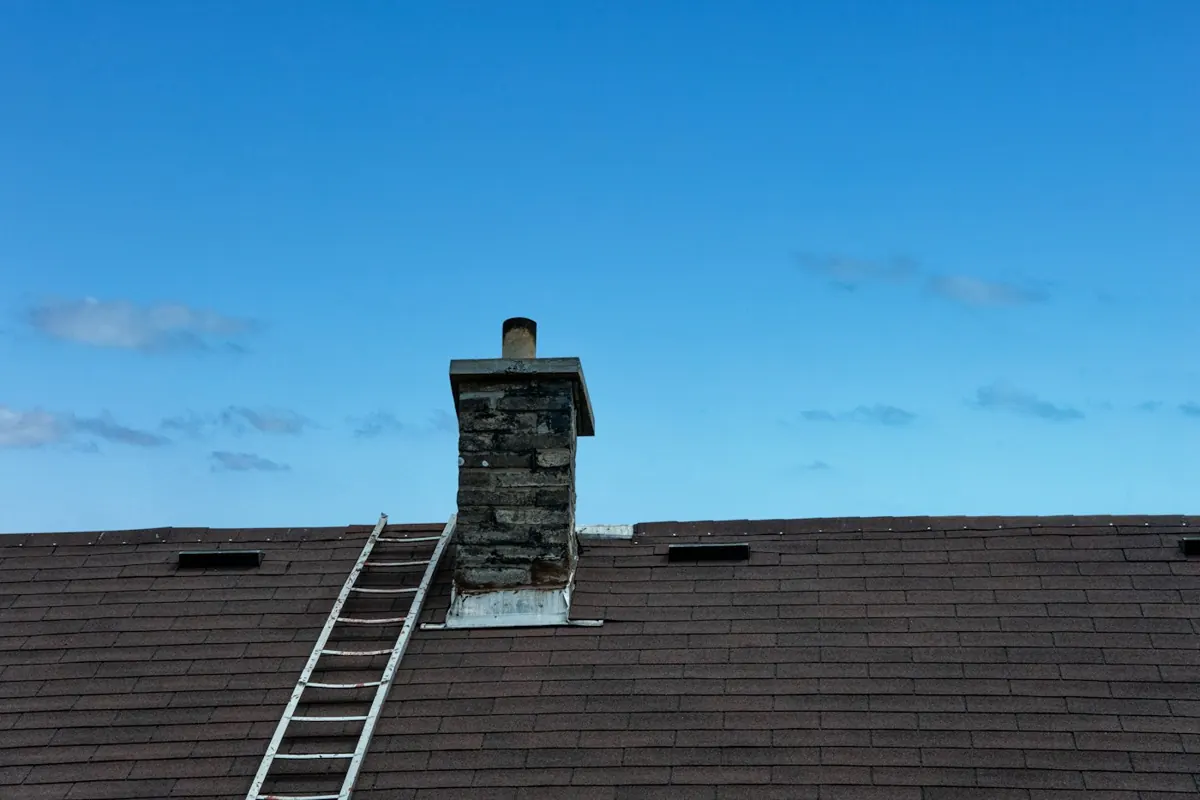 Does My Chimney Need Rebuilding, or Just Repair?The signs a Northwest Indiana chimney is past repointing and needs a partial or full rebuild, and what each option costs.
 Birds, Raccoons or Squirrels in Your Chimney?Chirping, scratching or a smell from the fireplace? How to handle chimney swifts, raccoons and squirrels in a Northwest Indiana chimney, and how to keep them out.
 What to Do After a Chimney FireThe steps after a chimney fire in Northwest Indiana: safety first, what to check, insurance, and why the flue needs a camera inspection before the next fire.
Ready for a safer, cleaner chimney?
Same-week appointments, honest flat pricing, no scare tactics — and same-day emergency service when it can't wait. Licensed and insured.